
Building Sustainable Careers in Jazz:
Income Opportunities and Support for Working Musicians
Vester Bonnén
Research project prepared for Jazz Generation, October 2026
1. Background
For aspiring young musicians, the artistic possibilities in jazz are easily visible, but it is much
harder to discern how working musicians can balance earning a living, booking their next
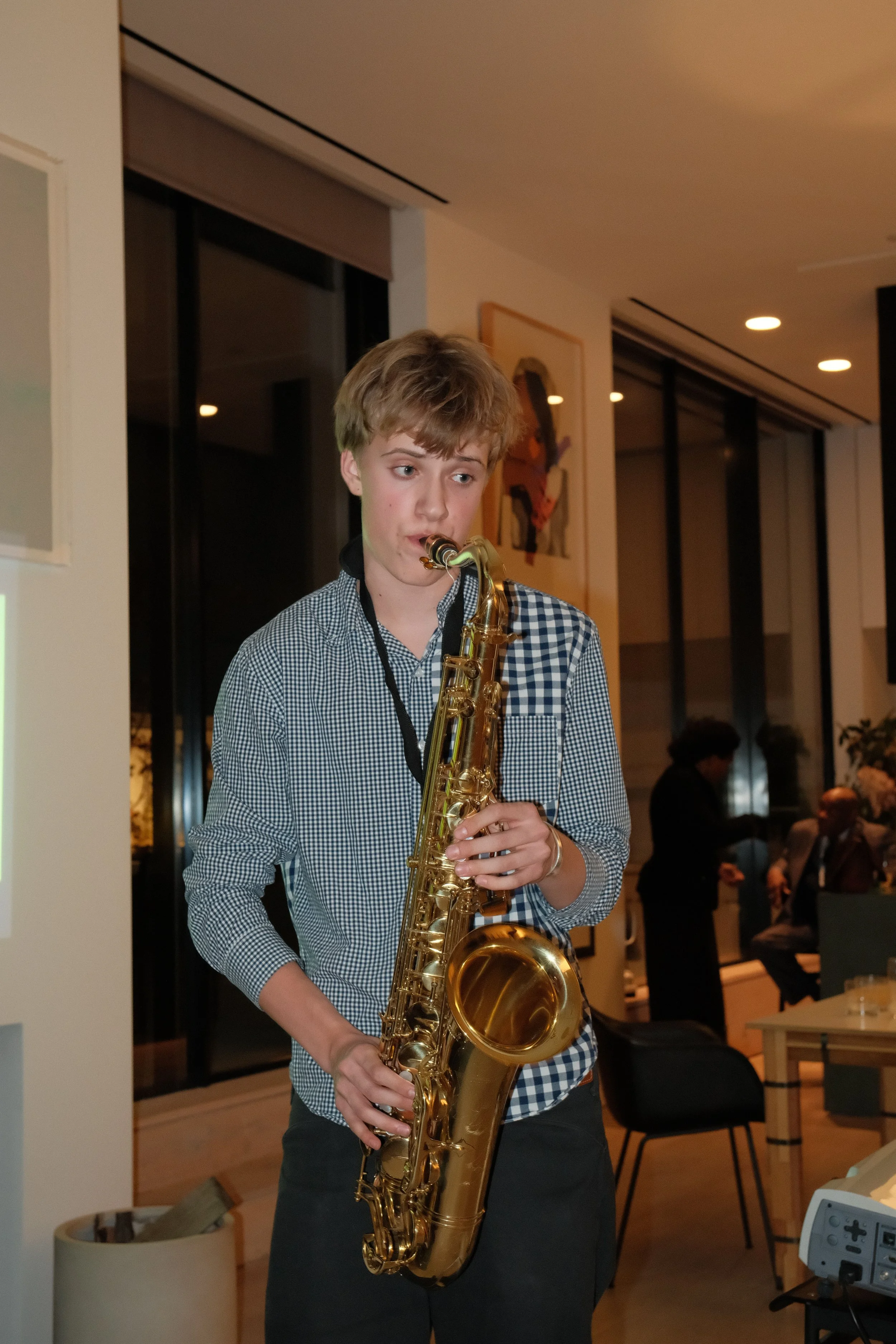
engagements and finding time to continue developing their craft. As a 17-year-old saxophonist,
who is interested in both the performance and business side of jazz, I wanted to understand
what kinds of earnings strategies were currently used by musicians and how they could build
careers that are sustainable, not just from an economic, but also artistic perspective. I was also
curious about how the wider music industry supports, or fails to support, jazz musicians’
careers.
This study was prepared for Jazz Generation, a charitable organization generating performance
and educational opportunities for jazz musicians. I have personally benefited from one of Jazz
Generation’s programs – the Jazz Standard Youth Orchestra – and I hope the findings of this
study can be useful to other young musicians and to an organization working with the jazz
community.
2. Research Question
The central question of this research project is:
What helps musicians build sustainable careers in jazz, and what kinds of support might
make those careers more achievable?
“Sustainable” is defined as: being able to meet living costs and continue working in music over
time, with room for artistic development. Income size, income predictability, time usage, working
conditions and costs, as well as artistic freedom, all influence the concept of sustainability.
3. Research Method
This was an exploratory qualitative study based on two parts:
1. Semi-structured interviews with 15 professional jazz musicians carried out in New York,
Barcelona and Copenhagen during summer and fall of 2026.
2. A review of relevant published literature, studies and statistics
Interviews
Between July and October of 2026, I conducted thirteen interviews with fifteen professional jazz
musicians in New York City, Barcelona and Copenhagen. The eleven individual interviews and
two paired conversations include musicians at different career stages and with experience
across American and European scenes. I recruited the musicians through professional contacts
I made by participating in jazz education programs run by the Jazz Generation (NYC) and the
Global Music Foundation (Barcelona), and the selection was not meant to be a balanced
comparison of the two locations.
The interviews were semi-structured i.e., conducted using and interview guide and open follow-
up questions. Topics covered included: income, career development, geographic opportunities,
and advice for someone starting out. Several respondents did not wish to disclose exact number
or rank income sources or priorities. Hence, the responses were analyzed thematically: material
was grouped around income, relationships and learning, geography, promotion (including social
media), and support for paid work. I looked for recurring themes as well as difference and
exceptions.
The analysis was based on transcripts of the interview recordings I made. Codes I1–I11 identify
individual interviews and P1–P2 identify paired conversations. In the following report, accounts
are paraphrased and names withhedl names to respect privacy assurances given to the study
participants.
My experience as a student musician helped me ask the interview questions, but it does not
make me an expert on the profession. The musicians’ accounts are hence the main evidence in
this report.
Published Literature Review
This short review of published literature and statistical reports was used to provide context for
the interview question and to interpret interview findings. It draws on selected academic studies
and a large musician survey, rather than attempting to be a comprehensive review.
In her 2013 article, Thomson examines the multiple roles and income sources of working
musicians (not only jazz musicians). Pinheiro and Dowd (2009) investigate the relationship
between jazz musicians’ earnings, experience, versatility, and professional connections in three
metropolitan areas. The 2008 study by Creech et al. examines the challenges and mitigating
factors of transitioning from music education to professional work. The (somewhat outdated)
article by Haynes and Marshall (2018) examines the advantages and disadvantages of social
media in supporting the careers of independent musicians.
A large German jazz survey from 2022, the 2023 UK Musicians’ Census with close to 6,000
respondents, and reports on venues and arts support are used to add statistical and institutional
context. It is important to note that older articles and studies do not necessarily match 2026
conditions.
AI was used in identifying literature and statistical data.
3. Scope and Limitations
The interviews provide an account of independent musicians’ experiences, not statistically
relevant data. Any financial information that was collected is incomplete and self-reported.
Hence, I do not calculate average earnings nor make causal claims based on the data. Some of
the interview guide questions suggested possible answers. Recruitment of respondents through
personal contacts may favor more well-connected musicians. I did not include people who left
professional music in my interviews. In the conclusions and recommendations section, I
interpret the evidence rather than report tested or proven strategies. The project was prepared
for Jazz Generation.
4. Findings
Few Musicians Can Make a Living from Jazz Performance Alone
My strongest conclusion from this research is that young jazz musicians should prepare for a
career where performance is just one of several income sources. Based on my interviews, these
additional sources include teaching (80% of interview respondents) alongside arranging,
booking and organizational work. [I1–I3; I5; I10]
The published research I reviewed makes supports this finding and makes it broader than just
the responses of a few individuals. (See Table 1) Germany’s Jazz Study 2022 found that 75% of
full-time jazz respondents also taught. In its self-employed full-time group, concert fees supplied
approximately half of income in the pre-pandemic year 2019. The rest came from teaching and
other sources (Deutsche Jazzunion, 2022, pp. 57, 77). Other wider musician surveys have
similar conclusions, although they cover other genres besides jazz.
Table 1. Selected evidence on income and work
Source and Population Findings Implication
US survey, 2011; 5,371
respondents across
music genres (Thomson,
2013)
18% received all music income
from one category. Only 6.3%
received all music income from
live performances.
Income from only
performance was uncommon.
The figures did not show total
income or whether the
income reported covered
living costs.
German Jazz Study
2022; around 1,000
respondents
75% of full-time respondents
taught in addition to performing.
Concert fees represented just
under 50% of income for self-
employed full-time musicians in
2019.
Shows the importance of
other work alongside
performance. Is specific to
jazz musicians.
UK Musicians’ Census
2023; nearly 6,000
respondents across
music genres
43% earned under £14,000 a
year from music; 53% used
income or financial support from
sources outside music.
Music activities are not always enough to cover living costs.
Outside support includes employment, family help, and benefits.
A Portfolio Career Is the Most Realistic Income Model for Sustaining a Career in Jazz
My interviews and the reviewed literature support a practical conclusion that a portfolio career is
a more realistic starting model for young musicians than depending entirely on jazz performance
alone. This doesn’t mean that performance isn’t important – on the contrary. My interviews
document performance-centered careers: both I4 and I11 currently earn mainly through
performance and touring and do not teach; I6 and I9 also describe performance as the main
source of income. This shows that performance can remain central without establishing that all
living costs are met from playing jazz alone. [I4; I6]
Teaching and other work seem to be just part of the economic reality of a jazz career rather than
evidence that a musician lacks artistic commitment. This led me to ask the follow up question of:
which combination of paid work allows a person to keep developing and performing over
time? Here are the findings most relevant to this question:
• The largest income source is not always the most stable. For I3, teaching provides 30–
40% of annual income and is a dependable source. Even though performance fees bring in
the larger income share for I3, they vary considerably between busy and quiet months. This
response illustrates why the share of annual income and the reliability of that income are
both relevant levers to consider. In other words, a smaller, predictable income source can
make it possible to cope with variations in a larger one. [I3]
• For I2, gigs and some private teaching form the largest source of income. I2 would like
teaching to contribute more, in part because this would give him greater choice over which
performance engagements to accept. The same musician expresses a worry that too much
teaching could crowd out playing. This is an interesting finding: financial stability can offer
artistic freedom, but the work that produces stability also takes up valuable time. [I2]
• I1 identifies teaching as the largest income source while they continue to perform. I5
describes teaching as the most reliable source and explains how this activity, which was
initially taken on for financial reasons, ended up becoming meaningful. This produces
another interesting conclusion: teaching can be a valuable for both artistic and
educational reasons, as well as a source of income. [I1; I5]
• In P2, one of the respondents describes school teaching as less steady than expected and
says they prefer private lessons due to the greater control they offer over scheduling and
fees. I4 does not currently teach at all. These accounts challenge the more generalized
advice I have encountered about teaching that treats every teaching role as secure or
assumes that every good performer will want to teach. Those looking to teach should
consider factors like student demand, working conditions, preparation time, and their own
interest in the work, before committing to a teaching assignment. [P2; I4]
• A career can be more than just performing and teaching. I7 reports receiving income
from organizational work, performance, teaching, and booking, and says that organizational
work contributes the most. I7 also describes how previous work at a music venue created
valuable lasting contacts with musicians. I5 describes project management as another
source of income. These examples show that there are more choices available to young
musicians interested in the music industry: a sustainable career can involve creating
opportunities for other artists as well as performing yourself. [I7; I5]
• The balance of income can change over time. I1 performed before teaching became a
major source of income for them. I7 gradually added activities and now aims to take fewer,
better-paid performances. One income mix is therefore only a point in a career, not a life-
long formula for a musician. [I1; I7; I10]
5
Taken together, these findings highlight how income portfolios should be evaluated not only
based on the number of income sources but also how the different activities work together and
support each other. For example, a regular teaching engagement may improve income stability
but create conflicts with larger touring opportunities. Or numerous small gigs may cover
essential living costs but not leave enough time and energy for musical development. In other
words, simply adding more activities does not guarantee a sustainable career.
Being Best Is Not Good Enough – Relationships Turn Talent into Opportunities
The interview respondents seem to agree that musical ability is essential to a successful career,
but they describe a profession where this is not enough. People need to know what a musician
can do but also feel comfortable working with them. I1 links instrumental competence with
punctuality, kindness, and relationships that have developed naturally through shared musical
experiences. I7 explains that musicians may invite someone on the road after seeing how that
person is behaving over time. These are accounts of trust built through repeated contact. [I1; I7]
It seems that learning and relationship-building often happen together. I2 values the community
of peers and teachers built during their studies. I4 describes how playing with others can lead to
further development of musical abilities as well as to projects and engagements. I6 emphasizes
practical skills learned on the bandstand, such as introductions, endings, listening, and
responding to other players. I5 highlights demanding musical encounters with experienced
players as a lasting source of growth as an artist. [I2; I4–I6]
The published research I reviewed supports these findings. In the study by Pinheiro and Dowd
(2009) stronger social connections and greater musical experience were associated with higher
earnings among jazz musicians in three US metropolitan areas. The study of 27 musicians
across four genres by Creech et al. (2008) identified mentoring, peer networks, and varied
performance experience as useful support in the transition to professional life.
It is important to note that the interview respondents resist treating networking as a substitute for
musicianship. I3 emphasizes playing well and developing an individual musical voice. For a
young musician, the implication is to strive to become a player others have heard, learned with,
and can rely on. [I3]
A Bigger Scene Is Not Always Better
Large urban jazz centers might offer more work opportunities for a musician, but the cost of
living and working in these centers might reduce their attractiveness. I2 describes the work
required to establish themselves in a large scene and recognizes the security of another
musician’s teaching position elsewhere. I3 mentions higher competition in larger jazz cities. I7
emphasizes the relationship between modest gig fees and living costs. In conclusion, more
venues in a city do not automatically mean enough accessible, adequately paid work for each
musician. [I2; I3; I7]
Larger jazz centers can, however, offer substantial artistic benefits. I5 describes a major jazz
center as transformative because of the musicians and musical standards they encountered
there. I6 makes a very illustrative point: a large jazz scene might make it easier to play the
music one wants, even if making a living is still difficult. [I5; I6]
6
Social Media Can Be an Important Career Tool for Emerging Talent in Particular
Social media can create visibility for a young musician’s work before that musician has an
established reputation. The respondents’ clearest support for social media is with regards to
musician discovery, promotion, and facilitation of professional contact. I6 believes that social
media has made it easier for younger players to create visibility for themselves and obtain gigs.
I4 describes a self-reinforcing cycle in which playing with others leads to gigs, gigs require
promotion, promotion increases Instagram presence, the resulting wider recognition strengthens
professional credibility and finally, in I4’s view, helps in getting fair payment. I7 also thinks online
presence as helpful, but mentions the importance of face-to-face relationships and trust [I4; I6;
I7]
One of the respondents in P2 places strong personal emphasis on building a social media
presence and thinks it is underused by others. I5, who is an older respondent, also argues for
adapting to current promotional tools and compares digital promotion with press packets and
posters of the past. This shows that support for digital promotion (including social media) does
not neatly split into younger proponents and older opponents. [P2; I5]
The interviews also captured criticism and skepticism of social media. I2 recognizes some of the
professional importance of social media but does not recommend unrestricted use. I2 gives a
personal account of how social medica can provide inspiration, but can also be misleading,
drain energy, and increase anxiety. I1 mentions the growing pressure to demonstrate – to
managers and promoters – an audience appeal through social media. Taken together, these
accounts suggest that being visible on social media creates an additional demand on musicians’
limited time. This can be especially stressful if the time needed to create promotional content
competes with time left over for practice. It can also be frustrating when a growing social media
following becomes confused with musical or artistic growth. [I2; I1]
Even though the study by Haynes and Marshall (2018) was made before today’s social media
platforms and is not a study of young jazz musicians, it provides a relevant comparison to my
research. The 43 independent musicians surveyed and interviewed by the authors placed value
on online reach and professional connections, but they were less certain about financial returns
and often found it difficult to build reach beyond existing audiences. The study findings support
networking but warn that one should not assume online reach automatically produces a
sustainable career. This aligns with the finding from my interviews, which also highlight the
importance of distinguishing visibility, professional connections and earnings as separate
potential outcomes of social media that aren’t necessarily clearly linked.
Structural Changes Are Needed to Maintain Jazz as an Art Form
The simple truth is that it doesn’t matter how good a musician you are, if there aren’t enough
well-paid performance opportunities. I1 would like more regular small gigs and I3 describes a
mismatch between the number of well-trained musicians and the available stages. In P1, the
interviewees mention places to play together, steady work, and support for creative activity as
important aspects of a sustainable career. [I1; I3; P1]
The problem is not only limited to jazz musicians. Live music venues themselves also face a
difficult business model. The Music Venue Trust’s Annual Report 2025 shows that 53.8% of UK
grassroots music venues made no profit, while the sector’s average profit margin was 2.5%
(Music Venue Trust, 2026, pp. 8–11). These figures cover multiple music genres and cannot
7
hence be transferred directly to jazz clubs. However, they still show why increasing musicians’
earnings is not as simple as just asking already strained small venues to pay larger fees.
Funding from public and private sources can help venues cover part of the performance fees
and in this way support paid performances. For example, The Danish Arts Foundation directs
grants to cover musicians’ fees at eligible venues and music associations, with municipal co-
funding. Jazz Generation’s KEYED UP! supplements professional musicians’ performance
payments and draws support from foundations, individual donors, and state agencies. These
are concrete models for putting support into paid engagements.
I4’s discussion of subsidized performance opportunities offers a more nuanced example of their
value: support can give musicians room to make projects that would be difficult to finance from
audience revenue alone. I4 also challenges the expectation that young players should accept to
play for free just to get exposure. On of P2 respondents on the contrary emphasizes the
experience gained from playing gigs regardless of compensation. This disagreement raises an
important accessibility issue: if early experience depends heavily on unpaid work, those who
can afford it have an advantage. [I4; P2]
Financial subsidies are not the only form of support needed to keep live jazz performances
alive. Audience development is another important area. I1 mentions listeners who may not know
what to expect from a jazz concert. I7 emphasizes connecting directly with audience members
and cultivating future demand. I6 also stresses the relationship between performance and
listeners. These responses point to the importance of finding more structured ways to cultivate
and educate a future generation of jazz audiences. [I1; I6; I7]
Business education of jazz musicians is identified as another form of support. I7 wants more
practical preparation for financial and administrative responsibilities. I6 describes students
acquiring advanced musical skills without obtaining a clear picture of the work they intend to
pursue. Learning skills such as budgeting a project, communicating with a booker,
understanding payment terms, and organizing a performance could help musicians make the
most of their work opportunities. [I7; I6; I11]
5. Implications and Conclusions
For young musicians:
Develop a second paid skill. Try different paid jobs like teaching a few private students,
arranging for an ensemble, organizing an event, or learn recording and production skills. Before
expanding your work in a given area, evaluate your personal enjoyment and determine how
much demand there will be for your services in the area.
Actively seek opportunities to play with peers and mentors to build not only skill set but
lasting relationships. Young musicians could form a rehearsal and performance group and
invite more experienced musicians to come and play with them and give them feedback. (This is
an approach that I am already currently testing with the current operating model of the Jazz
Standard Youth Orchestra, which is one of Jazz Generation’s programs.). When choosing a
school, don’t just look at teaching quality and cost, but also evaluate what opportunities the
8
school offer for playing with peers and mentors, and what performance opportunities could arise
from those.
Compare longer-term work opportunities based on not just pay, but cost of
working/living. When evaluating moving to a new city, for example, don’t just look at paid
performance opportunities, but also consider other factors like living costs, travel times, teaching
opportunities, competition from other musicians vs. quality of potential collaborators, and size of
available audiences.
Use social media purposefully. Match your content to your intended outcome. For example, a
recording of a strong performance can help a bandleader or booker discover you, a reel
breaking down well-known solo can create more engagement and bring new followers, a
concert announcement can bring someone to your show, and a clear contact page can make a
booking easier. Stick to a manageable yet consistent posting frequency.
For Jazz Generation:
The strength of Jazz Generation is their ability to connect artistic development with work that
pays. KEYED UP! already creates more paid performance opportunities, while the Jazz
Standard Youth Orchestra provides performance experience, artistic mentorship, and student
leadership opportunities. I’d like to propose the following ideas to build further on Jazz
Generation’s existing work:
Support career continuity as well as individual performances. Recurring engagements like
residencies at selected venues could help musicians better plan their income, create an
ensemble and bring audiences back. It would be important to specify in advance what the
venue’s contribution is and how Jazz Generation’s subsidy can be used to increase the
musicians pay rather than just replace money the venue would otherwise provide.
Create opportunities to link mentorship end education with paid opportunities and
hands-on business learning. A youth ensemble could for example be asked to produce a
public concert. Jazz Generation could invite a music industry professional to mentor the
students and help them work through all the related project tasks including, how to choose a
repertoire, run rehearsals, negotiate with a venue and agree on all contractual details, prepare a
budget, an participate in promoting the concert.
In summary, my main conclusion for other young musicians is to design a realistic portfolio of
work that allows you to make a living and supports artistic growth. For Jazz Generation, it is to
help musicians make that portfolio less precarious through broader career learning,
relationships, and adequately paid performance opportunities. I truly hope that jazz musicians
can afford to keep playing. The future of jazz depends on it!
9
References
Creech, A., Papageorgi, I., Duffy, C., Morton, F., Haddon, E., Potter, J., ... Welch, G. (2008).
From music student to professional: the process of transition. British Journal of Music
Education, 25(3), 315–331. doi:10.1017/S0265051708008127
Danish Arts Foundation. (n.d.). Honorarstøtte til rytmiske spillesteder [Performance-fee support
for live music venues]. Source: https://www.kunst.dk/for-ansoegere/soeg-tilskud/honorarstoette-
til-rytmiske-spillesteder
Deutsche Jazzunion. (2022). Jazz Study 2022: Living and working conditions of jazz musicians
in Germany. U. Johnen, J. Fraisse, S. Marquardt, & R. Nübling. English edition. Source:
https://deutsche-jazzunion.de/wp-
content/uploads/2024/02/Deutsche_Jazzunion_Jazz_Study_2022.pdf
Haynes, J., & Marshall, L. (2018). Beats and tweets: Social media in the careers of independent
musicians. New Media & Society, 20(5), 1973–1993. doi: 10.1177/1461444817711404
Help Musicians & Musicians’ Union. (2023). Musicians’ Census 2023. Findings published by the
Musicians’ Union, September 11. Source: https://musiciansunion.org.uk/news/first-ever-uk-
musicians-census-provides-unparalleled-insight-into-the-careers-of-the-uk-s-musicians
Jazz Generation. (n.d.-a). KEYED UP! Source: https://jazzgeneration.org/keyed-up
Jazz Generation. (n.d.-b). Jazz Standard Youth Orchestra. Source:
https://jazzgeneration.org/jazz-standard-youth-orchestra
Music Venue Trust. (2026). Annual Report 2025. Source: https://www.musicvenuetrust.com/wp-
content/uploads/2026/01/MVT_2025-Annual-Report_Digital-Spreads.pdf
Pinheiro, D. L., & Dowd, T. J. (2009). All that jazz: The success of jazz musicians in three
metropolitan areas. Poetics, 37(5–6), 490–506. doi: 10.1016/j.poetic.2009.09.007
Thomson, K. (2013). Roles, revenue, and responsibilities: The changing nature of being a
working musician. Work and Occupations, 40(4), 514–525. doi: 10.1177/0730888413504208
Online sources were consulted in October 2026.
Primary research
Thirteen interviews recorded by the author during July–September 2026, involving fifteen
professional jazz musicians. I1–I11 identify individual interviews; P1–P2 identify paired
conversations. The anonymized interview records are the sources for the bracketed citations in
the text. Names and direct quotations are withheld in accordance with the assurances given to
participants.